The Dark Ages, often associated with the decline and fall of the Roman Empire and characterized as a period of monotony, violence, and disarray. Many historians argue that this tumultuous period in history could have been avoided if not for the defeat of Emperor Valens and his army at the Battle of Adrianople. Valens' arrogance and hasty decision-making led to this defeat, which ultimately allowed the Visigoths to penetrate Western Europe and wreak havoc on the once-mighty Roman Empire. While the characterization of the Dark Ages as a time of decline is true for the Romans, this era also spurred forced innovations in military, government, politics, trade, and societal values and processes.
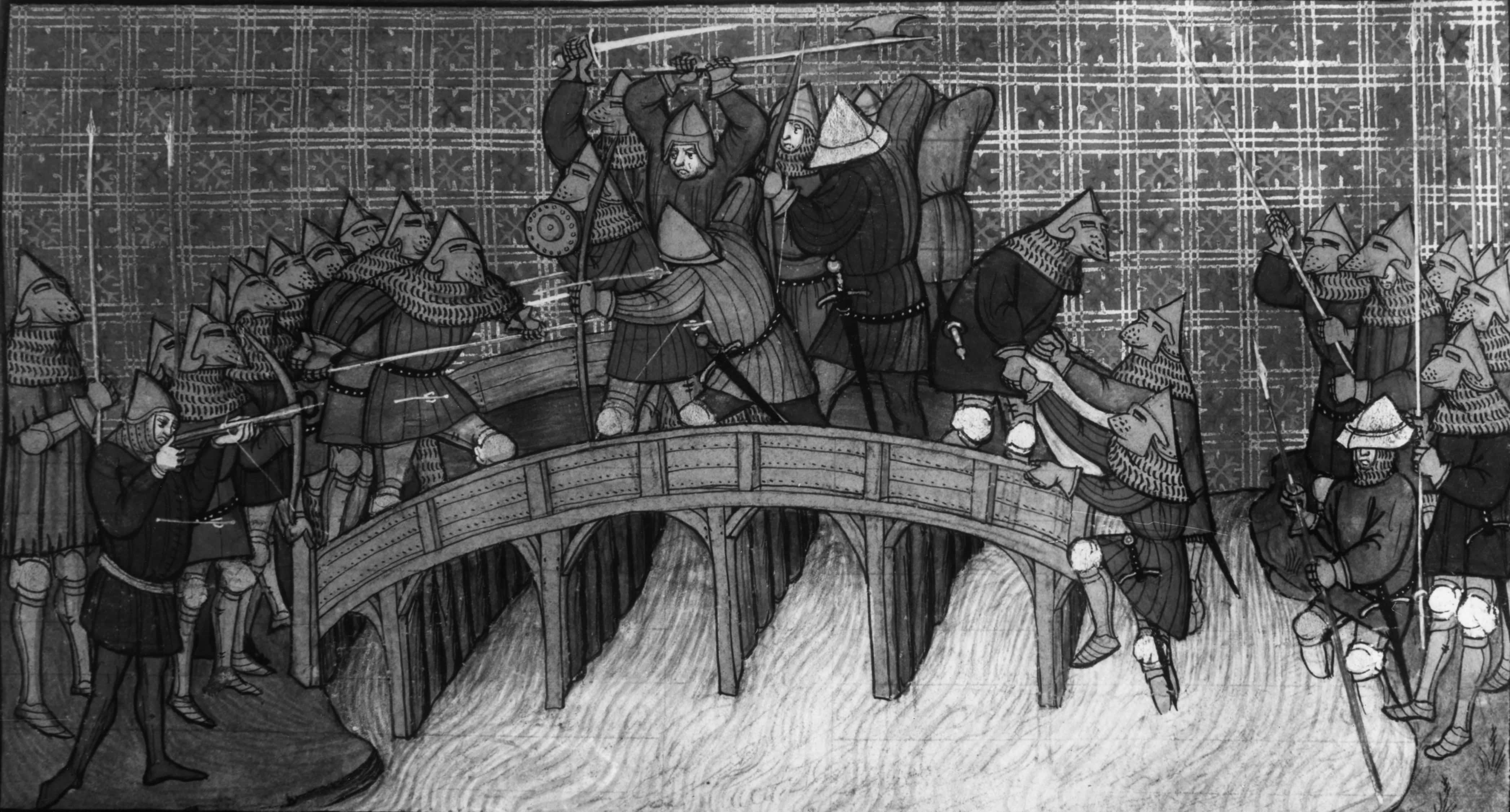
Historian Barry Strauss concurs that a victory by Valens' army at the Battle of Adrianople may have prevented the Dark Ages from spiraling out of control. Valens' army, ill-prepared and vastly underestimating the Visigoths' strength, suffered dire consequences. The emperor's impatience and refusal to wait for reinforcements from his nephew, Gratian, proved to be a fatal mistake. Valens estimated his army at 30,000 to 40,000 soldiers and believed the Visigoths numbered around 10,000—a gross miscalculation. His failure to provide his troops with adequate rest and battle tactics against this overwhelming invasion led to a catastrophic defeat. As Strauss notes, "With the Visigoth victory, they were free to roam the Balkans, looting Greece, and ultimately entering Italy to plunder Rome" (Strauss 78-79). This single battle set in motion the events that led to the Dark Ages, marking the decline of the Roman Empire and paving the way for the rise of new empires in Arabia, Asia, and beyond.
However, it is essential to consider that had Valens won the Battle of Adrianople, it might have been possible to piece back together the Roman Empire. While the Dark Ages did signify the fall of Rome, it also gave rise to the development of sophisticated political systems and doctrines. One such pivotal development was the authoring of the Magna Carta, a document that laid the foundation for modern constitutional governance. This monumental shift in political thought and practice eventually led to the emergence of new empires that would explore and conquer the rest of the world.
Moreover, the Dark Ages allowed for the flourishing of diverse religious and cultural influences in the Western world. While Roman Catholicism had long dominated Europe, this period saw the coexistence and interaction of various religious traditions, including the spread of Islamic influences. The Dark Ages forced the world to adapt to new circumstances, leading to the rise of smaller kingdoms seeking power and territory for their people. As these smaller entities vied for dominance, they ventured into the unknown, ultimately exploring and expanding their empires to the New World.
In essence, the Dark Ages were a pivotal and transformative period in history. While the fall of the Roman Empire was a significant consequence, it is equally important to recognize the unintended consequences and innovations that arose from this time. Valens' defeat at Adrianople set in motion a chain of events that ultimately led to the reconfiguration of political systems, the flourishing of diverse cultures, and the expansion of new empires. The Dark Ages forced the world to adapt, evolve, and venture into uncharted territories. The Dark Ages were not merely a time of decline, but a crucible of change and transformation that laid the groundwork for the world we know today.
Roman Catholicism had been the dominant religious force in Europe for centuries, this period witnessed the spread of Islamic influences, particularly in Spain and southern Italy. The Islamic world was a center of learning, science, and culture during the Dark Ages, and this exchange of knowledge had a profound impact on European society. This influx of knowledge played a crucial role in the intellectual revival of Europe during the Renaissance, laying the foundation for advancements in science, philosophy, and the arts. The Dark Ages, far from being a time of unrelenting darkness, was a period of cultural exchange and cross-fertilization that contributed to the emergence of the modern world.
Furthermore, the fall of the Roman Empire and the subsequent fragmentation of political power in Western Europe led to the rise of smaller kingdoms. These entities often engaged in territorial expansion and competition for resources, driving them to explore new lands and regions. This expansionist drive ultimately culminated in the Age of Exploration, during which European powers ventured into the unknown, discovering new continents and establishing vast empires.
The Age of Exploration, which began in the late 15th century, had profound and far-reaching consequences. European nations colonized distant lands, created global trade networks, and introduced new cultures and ideas to the world. The exploration and colonization of the Americas, Africa, and Asia reshaped the course of history, leading to the emergence of new empires and the interconnected global world we inhabit today.
It is crucial to recognize the unintended consequences and innovations that arose from the Dark Ages. Valens' defeat at the Battle of Adrianople set in motion a chain of events that transformed political systems, facilitated cultural exchange, and drove territorial expansion. The Magna Carta, the spread of Islamic influences, and the Age of Exploration are just a few examples of the profound changes that emerged from the Dark Ages. Rather than being a mere descent into darkness, this period was a crucible of change and transformation that shaped the course of history and laid the foundation for the modern world.